Think of the 5 closest people in your life. For me, it’s my mum, my dad, my two brothers, and my best mate. Statistically, one of these closest people in your life will experience a mental illness in their life.
Mental illness – one of the main influencers of the leading cause of death of Australians aged 15-44:
Suicide.
Chris is an Australian man and was 18 years old when he attempted suicide. He shared his story on the ABC in “Suicide and Me” in 2013.
Credit: Australia Broadcasting Company Retrieved from: Youtube
Why Is Chris’s Case Important?
Significance of Suicide in Australian Males
Every case of suicide is a tragedy. A tragedy that affects countless people every day. However, what in particular makes these cases of suicide in Australian men like Chris’s such a significant health issue?
Suicide is Silent but Extremely Dangerous
- More than 3,000 Australians died by suicide in 2017.
- Over 65,000 Australians make a suicide attempt each year.
- Suicide ranks second as the cause of potential years of life lost by Australian males.
Men are at the Greatest Risk
- In 2017, about 75% of people who died by suicide were males.
- An estimated 72% of males don’t seek help for mental disorders.
- Two thirds of men will die on their first attempt.
Australia’s Lack of Effective Preventative Practices
- The majority of men at greatest risk of suicide are not engaged by mental health services.
- Current ‘mental health’ practices and policies may even make difficulties harder.
Clinical Perspectives
Health Information About Suicide
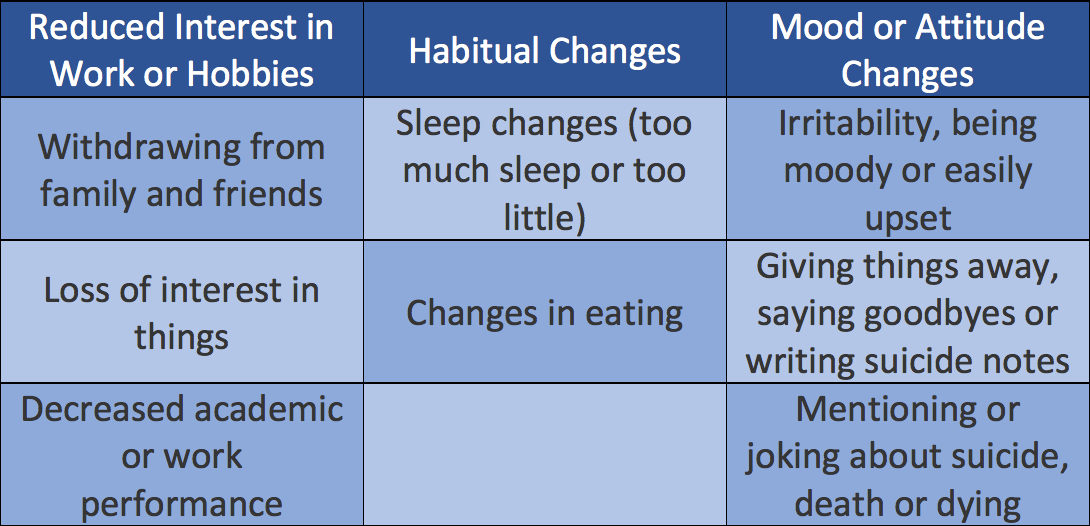
Suicidal tendencies manifest themselves in many ways. Some of the main signs and symptoms of suicidal tendencies are summarised in the table below.
Researchers have also discovered a common pattern of abnormalities in the brains of people with depression and social anxiety. Both patients with depression and anxiety had abnormal brain function in regions associated with focus and attentiveness.
Chris In Danger
Risk Factors
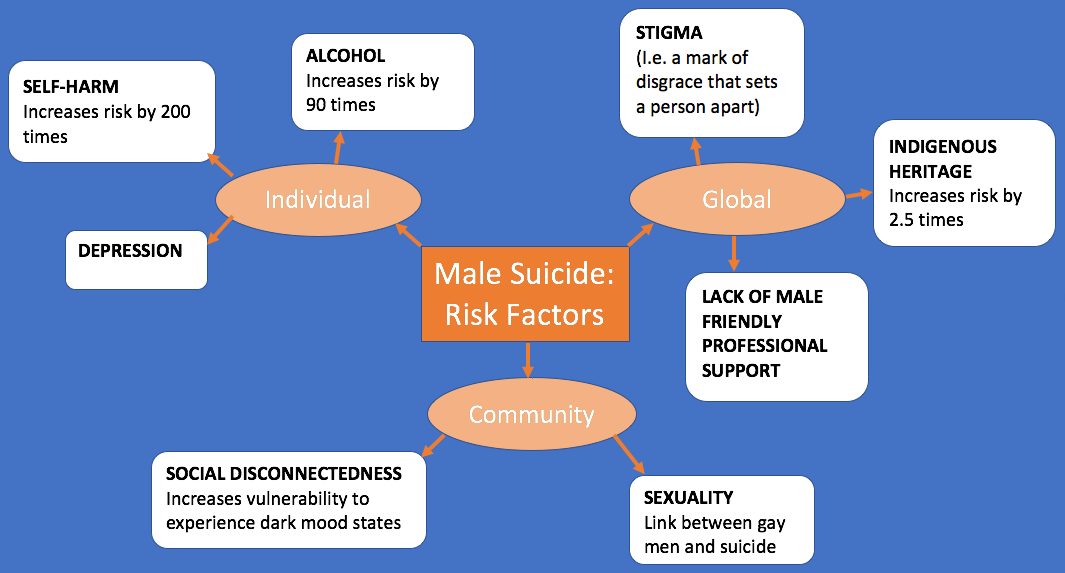
Risk factors are factors that represents a greater risk of a health disorder or other unwanted condition. Some risk factors for Australian male suicide are shown below.
Other risk factors include:
- Chronic pain
- Job or financial losses
- Trauma or abuse
Unfortunately, Chris fell victim to many of these risk factors, including self-harm, depression, alcohol, social disconnectedness, and stigma.
Credit: Australia Broadcasting Company
Saving Chris
Preventative Measures
Many measures are being undertaken throughout Australia to prevent Chris’s situation, such as RUOK? day. Aside from this, there are a variety of other current measures in place in Australia, such as:
Education about suicide and its prevention: many suicide research units have been created in high schools and universities, including graduate and postgraduate courses.
Non-specialised health professionals: involves the expanded capacity to improve management of suicidal behaviours by involving non-specialised health workers, which in turn helps in rural areas where resources are limited.
Trained volunteers: Work to provide counselling as a valuable source of emotional help for individuals in crisis. Such male specific Australian programs include:
MensLine Australia (online counselling and forum for men)
Dads In Distress (peer support for separated dads)
Why Things Went Wrong
The Need for Better Health Outcomes
Credit: Australia Broadcasting Company
As you can hear from Chris, there is no “magic preventative tool”.
In fact, plenty of prevention methods are ineffective. It has been noted that treatment policy and expenditure in Australia does not reflect the differences in males and females in regard to:
- Suicide attempt severity and mental health system engagement
- Risk/protective factors such as social integration
Both of which leave many men without adequate assistance.
Long Term Prevention
Challenges for the Future
Looking to the future, there are challenges that stand in the way of effective prevention, including:
Changing Social Environments
Mental health can easily be influenced by entities that are constantly changing – and thus hard to monitor – such as media and the internet.
Stigma
Stigma, which is extremely difficult to change, is experienced by three out of four Australian men with a mental illness.
Credit: Australia Broadcasting Company
Fortunately, Chris survived his suicide attempt.
With enough hard work and dedication, we can work to prevent another case like Chris’s from occurring.
 Matthew Hardie's Blog